
By Glenn ten Cate
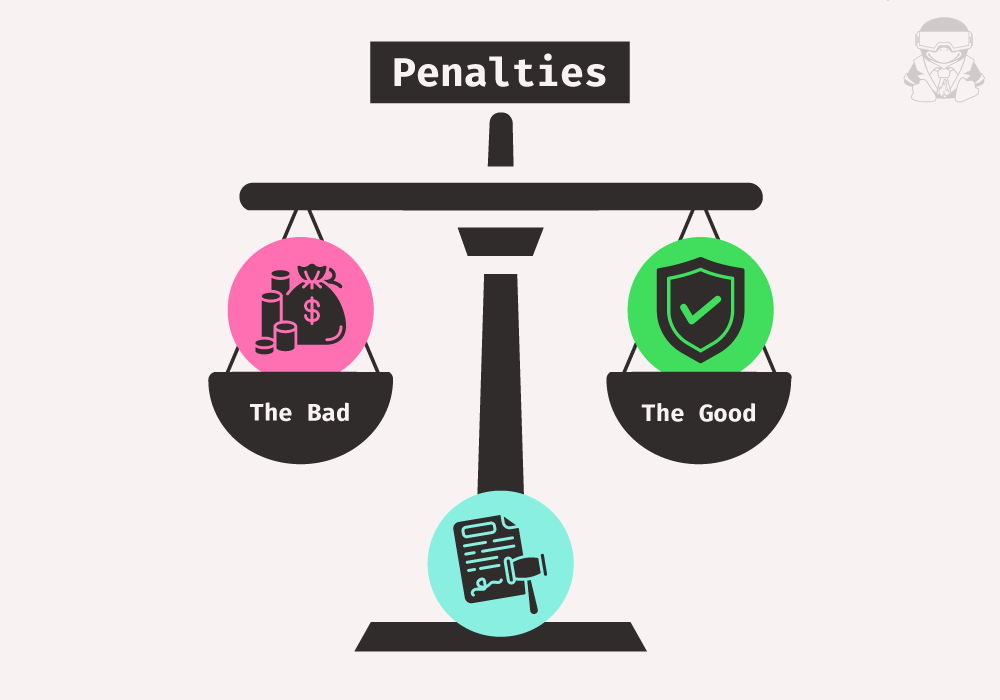
As more headlines announcing data breaches surface across the media, the question arises: Should there be more aggressive economic penalties for software companies that produce insecure software? This article explores the growing debate surrounding the imposition of such penalties.
The Critical Need for Data Security
In an era dominated by technology, our lives are increasingly intertwined with software applications and digital infrastructure. Users rely on applications to handle data for critical necessities, including finances, healthcare, communication, and education. As reliance on software grows, system security becomes more critical than ever before, with software vulnerabilities representing one of the most significant threats to the integrity of the digital world. Malicious actors can exploit these vulnerabilities to compromise data, disrupt critical systems, and even cause financial losses or harm to individuals.
Given the value of the data at stake, governments and users alike are questioning the digital safety of software companies. The recent record-breaking €1.2 billion fine imposed on Meta Platforms Ireland Ltd. in 2023 by Ireland’s Data Protection Commission (DPC) for violating GDPR international transfer guidelines highlights the increasing scrutiny on tech giants. This case underscores the consequences they face for lapses in data security.
Meta was found to have mishandled personal data during transfers between Europe and the United States. This breach, centered around Meta’s use of standard contractual clauses since 2020 without ensuring an adequate level of data protection, exemplifies the risks inherent in international data transfers and the complexities of complying with stringent regulations like the GDPR.
This incident underlines the critical need for robust data protection measures in software development. The hefty fine against Meta (which the company appealed, but the appeal was adjourned until the EU Court of Justice resolves another appeal made by Meta concerning a different fine), emphasizes the growing trend of imposing significant economic penalties as a deterrent against insecure software development practices. However, it raises questions about the effectiveness of such measures. Will higher fines lead to better security practices, or will they simply be seen as a cost of doing business by these tech giants?

The Case for Economic Penalties
One of the primary arguments in favor of imposing economic penalties on software companies is the principle of accountability. When software vulnerabilities lead to data breaches, financial losses, or other negative consequences, it is oftentimes the end-users who bear the brunt of these impacts. Some people think that software companies should be held responsible for making sure their products are safe, just like other companies are responsible for ensuring the safety of physical items like cars, toys, and appliances.
Economic penalties can serve as a powerful incentive for software companies to invest more resources in security testing, secure coding practices, and regular software updates. Financial liability for insecure software encourages organizations to prioritize security throughout the software development lifecycle.

The Software Development Lifecycle (SDLC) represents the process of implementing system security from the initial stages to the final stages of development. This diagram depicts the five stages of the SDLC: Requirement, Design, Development, Testing, and Deployment.
Insecure software doesn’t always come from malicious intent; sometimes, it comes from a lack of awareness or negligence on the part of software development teams. Bug bounty programs are gaining popularity as a way to encourage vulnerability disclosure, offering rewards to individuals who uncover flaws.
While bug bounties encourage the identification and reporting of existing vulnerabilities, they do little to prevent these vulnerabilities from being introduced in the first place. Bug bounties are valuable, but they tend to favor the security research community and independent ethical hackers. Smaller software companies or those lacking the financial resources to implement bug bounty programs may encounter difficulties in attracting the attention of proficient security researchers. Imposing economic penalties can level the playing field by requiring all software companies to meet minimum security standards.
Economic penalties can act as deterrents against negligent software development practices. The prospect of significant financial losses can motivate companies to invest in training, adopt secure coding standards, and implement rigorous security testing processes.
Consumers trust software companies when they use their products and services. They expect that their data and privacy will be safeguarded. When this trust is breached due to software vulnerabilities, it erodes confidence in the digital ecosystem. Imposing economic penalties can help protect consumers’ interests by incentivizing software companies to take security seriously. This, in turn, can lead to more robust security measures, the timely patching of vulnerabilities, and a safer online environment for users.
The Case Against Economic Penalties
One of the primary concerns about imposing economic penalties on software companies is the potential for unintended consequences. Fines and penalties could discourage software innovation by burdening companies with a fear of financial repercussions. This could stifle creativity and decelerate the development of new technologies.
Additionally, some argue that the threat of economic penalties may push companies to hide vulnerabilities rather than disclose them. This could exacerbate security risks, as undisclosed vulnerabilities cannot be patched or mitigated.
In legislation, it may be difficult to clearly define criteria for imposing penalties and assessing the security of vulnerabilities. Determining what constitutes “insecure software” can be a complex and subjective task. Software vulnerabilities exist on a spectrum, and security is not a binary concept.
Moreover, software vulnerabilities can arise from a multitude of factors, including third-party dependencies, unforeseen interactions, and evolving threat landscapes. Penalizing companies for every vulnerability may not be a practical or effective approach.
Economic penalties could disproportionately affect smaller software companies with limited resources. While large tech giants can absorb fines, smaller startups and businesses may struggle to recover from significant financial penalties. This could deter innovation and create an environment in which only established players thrive.
Introducing economic penalties for insecure software requires robust regulatory frameworks and oversight. There is a risk of regulatory overreach, where government agencies impose excessive fines or penalties without fully understanding the complexities of software development. It is a significant challenge to achieve the right balance between regulation and innovation.
Striking a Balance: A Comprehensive Approach
As the debate over economic penalties for insecure software continues to gain momentum, it is essential to consider a balanced approach. Here are some key recommendations that can lead to a comprehensive approach.
Collaboration and Education
Encourage collaboration between software companies, security researchers, and regulatory bodies to define industry-wide security standards and best practices. Invest in cybersecurity education and training to raise awareness of secure coding practices.
Incentives for Disclosure
Promote responsible vulnerability disclosure programs by offering legal protections and incentives to security researchers who report vulnerabilities. Encourage the adoption of coordinated disclosure programs.
Risk-Based Penalties
If economic penalties are considered, they should be based on a risk assessment that considers the severity of vulnerabilities, the company’s efforts to mitigate them, and the potential harm to consumers.
Regulatory Oversight
Ensure that regulatory bodies responsible for imposing penalties have a deep understanding of software development and cybersecurity. Establish clear guidelines and mechanisms for fair and consistent enforcement.
Support for Small Businesses
Implement measures to support smaller software companies in enhancing their security practices, such as providing access to affordable security testing tools and expertise. Open source security tools tend to be more affordable than proprietary options and carry a community invested in the tool’s continued improvement. Some examples of free open source security tools include:
- LLM Guard fortifies Large Language Models, offering data leak prevention, resistance to prompt injection attacks, and detection of harmful language.
- AWS Kill Switch is a Lambda function that enables teams to swiftly deploy restrictions in the midst of a security incident.
K0smotron efficiently manages Kubernetes clusters and supports cluster operations like scaling and upgrading.
Conclusion
While imposing economic penalties can serve as a powerful motivator for software companies to prioritize security, it also carries the risk of unintended consequences and regulatory challenges. In striving for a safer digital world, it is crucial to strike a balance between accountability and innovation. Collaborative efforts, education, responsible disclosure, and risk-based approaches can complement economic incentives, ultimately leading to more secure software and a resilient digital ecosystem.
As technology evolves, conversations about software security must adapt and incorporate diverse perspectives. Only through careful consideration and thoughtful policymaking can we hope to mitigate the risks posed by insecure software and foster a digital world that is secure, innovative, and trustworthy.
About the Author
Glenn ten Cate is a seasoned cybersecurity expert with an extensive portfolio in secure software development, consultation, and cybersecurity training. He currently serves as the Senior Cyber Security Instructor at The Linux Foundation.
Glenn’s career started as a Web Application Programmer / Business Analyst at Tricode, where he honed his skills for almost four years. He then worked as a Security Specialist at Pine Digital Security for four years before serving as a Mission Critical Engineer / Security at Schuberg Philis for three years. Glenn also held a role as ING Security Chapter Leader at ING Belgium for 5 years.
Glenn has been instrumental in guiding students at Google’s Summer of Code program for OWASP Foundation in 2018, 2019, 2020, and 2022. His expertise spans across Security, Linux, Pentesting, Training & Education, and various programming languages.
For his impressive contributions to cybersecurity, Glenn has received WASPY Nominations for Innovation / Sharing and Best Innovator and an Honorable Mention for Security Knowledge Framework project by Black Duck® Rookies of the Year.